AI Factories · InHome engineering note
How an AI software factory differs from a coding assistant
A coding assistant helps produce code; a governed factory keeps scope, specialist work, review and release attached to one work order.
InHome Development · Limassol, Cyprus ·
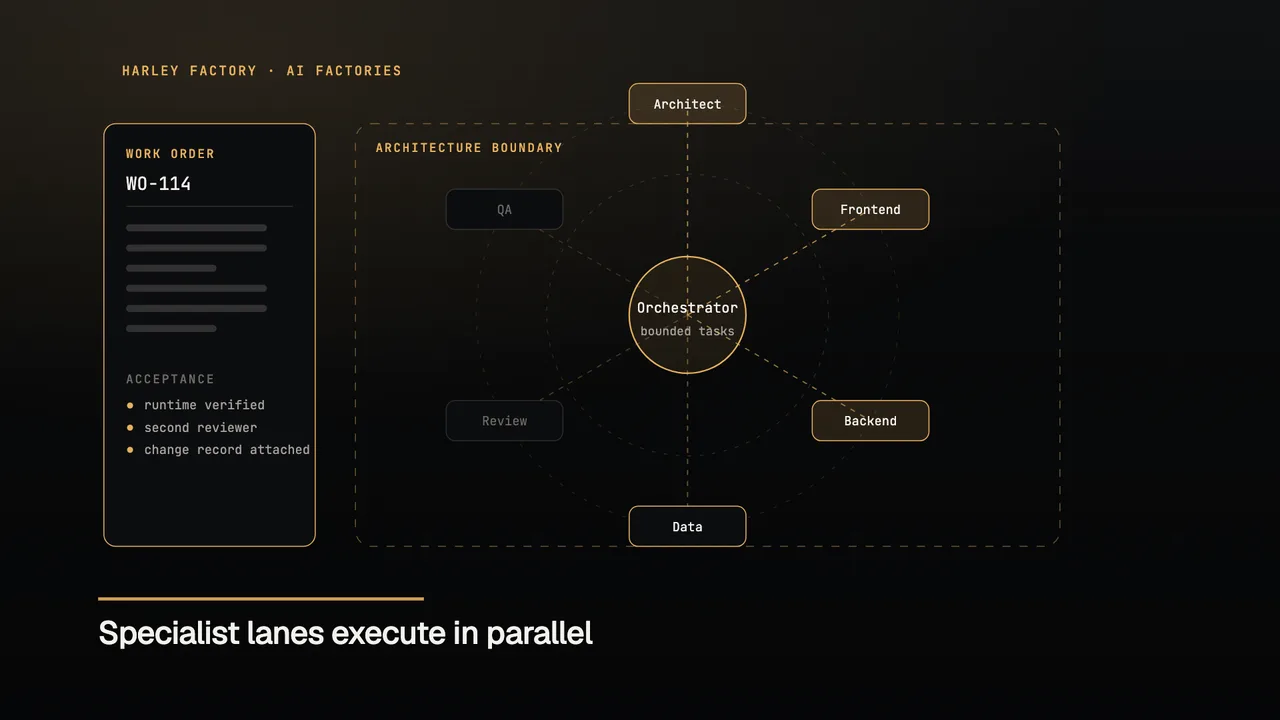
The unit of work changes
A coding assistant can suggest a function, explain an error or draft a test. It does not, by itself, define the business request, coordinate multiple specialties or prove that a deployed user journey works.
A software factory starts with a work order and acceptance criteria. Architecture, implementation, QA and review each operate within a bounded task and return their artifacts to that same record.
Independent review is part of the system
Harley Factory documents a foundation for model and specialist orchestration with separate review and owner-controlled gates. An agent or orchestrator cannot approve its own work simply because it produced a plausible summary.
A finding returns to the author, then the change is exercised again. The review path is visible so a technical buyer can distinguish an implementation from an accepted release.
A factory is not autonomous by default
Tests, browser checks, security review and runtime readback are different forms of evidence. None is replaced by a model saying the task is complete, and external actions remain within the owner’s approved scope.
This is an engineering approach and documented foundation, not a claim that Harley is a released autonomous SaaS. The practical benefit is a clearer decision about what is ready, what failed and who approves the next step.