Automation Systems · InHome engineering note
Why an automation run needs approval and a receipt
From a trigger to a confirmed destination without losing the human decision.
InHome Development · Limassol, Cyprus ·
A script is not the whole workflow
Moving content or data between two services can be a useful first step. It does not answer who approved the action, what happens after a failed destination call or how an operator confirms that the recipient received the right material.
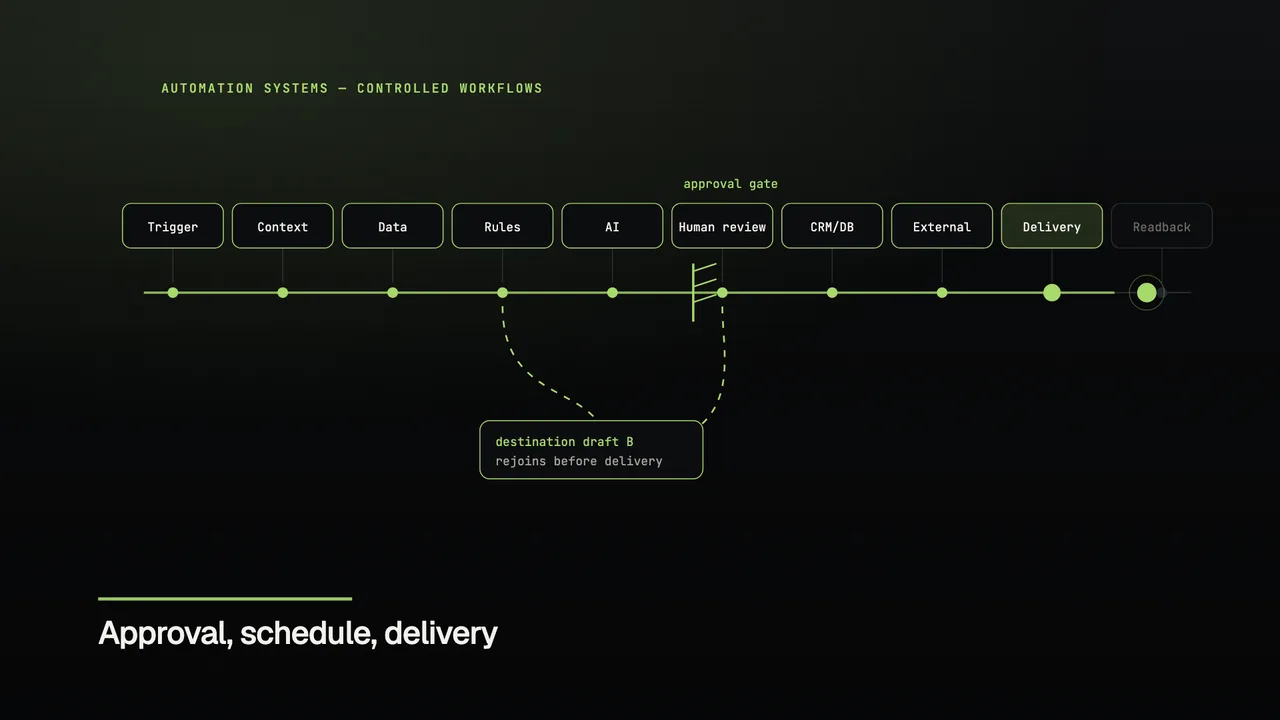
A multi-channel publishing design needs company boundaries, approval, retry and reconciliation. These controls make delivery reviewable across destinations instead of hiding it behind one scheduled-send status.
Carry one identity through the branches
An accountable run starts with a trigger and carries one identifier through context, creation and destination-specific versions. If a draft branches to two channels, both branches should still return to that run.
Approval is an explicit state between preparation and delivery. Where the action has external consequences, a person can inspect the result before it leaves the system.
Confirm the outcome independently
A provider call may return successfully while the business destination has not reached the expected state. Delivery therefore needs a receipt and, where supported, a separate readback or reconciliation step.
The business value is recoverability and accountability: an operator can distinguish prepared, approved, sent and confirmed work.